
In a Houston courtroom this summer, a jury heard what an expert witness had typed into ChatGPT. About 350 pages of it. The engineer hired to defend 3M had asked the chatbot to create an exceptional expert witness report and to show how 3M was zero percent at fault. Testimony put his finished report at roughly 85 to 90 percent ChatGPT. The jury came back with $61.5 million.
The case goes back to January 2020, when the Watson Grinding plant exploded, killed two workers and a man who lived nearby, and damaged hundreds of homes. Federal investigators found a leaking hose and a gas detection system that was not working. Families sued 3M, saying it did not properly service that system. 3M hired Josh Autenrieth of KnightHawk Engineering, at $475 an hour, to judge whether its work met the standard of care. During discovery, the plaintiffs' lawyer spotted a five-page document that read like chatbot output and asked for every prompt behind it. The deposition stopped for three hours.
Nobody can say how much that report moved the jury. Autenrieth testified the opinions were his and that AI drafted a starting point he edited. 3M says it will appeal. More than 2,000 plaintiffs are still waiting for their trials in the same litigation, and every one of their lawyers now knows to ask for the prompts. What he typed into a chatbot is evidence anyone can read.
That was the thread running through everything I covered this week. Your AI keeps a paper trail. The only questions are who owns it, who reads it, and who gets to see it first.
Photo: Kaboompics via Pexels

What changed
A Flint student asked Genesee County who had scanned his car. Josh Tewolde requested the county's Flock camera contract, the camera map, the search logs, and any scans of his own plate. He got the contract. The county withheld the rest, saying it does not own the system or the data, even though its own contract says the data belongs solely to the agency. The Mackinac Center Legal Foundation sued on August 18. More than 180 Michigan agencies run these cameras, and Michigan has no law governing any of it.
In Georgia, a woman typed her own plate into a public log site and found about 600 searches. The searcher was her ex, a police chief 15 miles away. The Washington Post counted at least 50 officers nationwide accused of misusing plate readers. In Milwaukee, an officer ran 179 personal searches through a system that required a case number for each one. He typed a word in the box. The control existed. The log existed. Nobody read it.
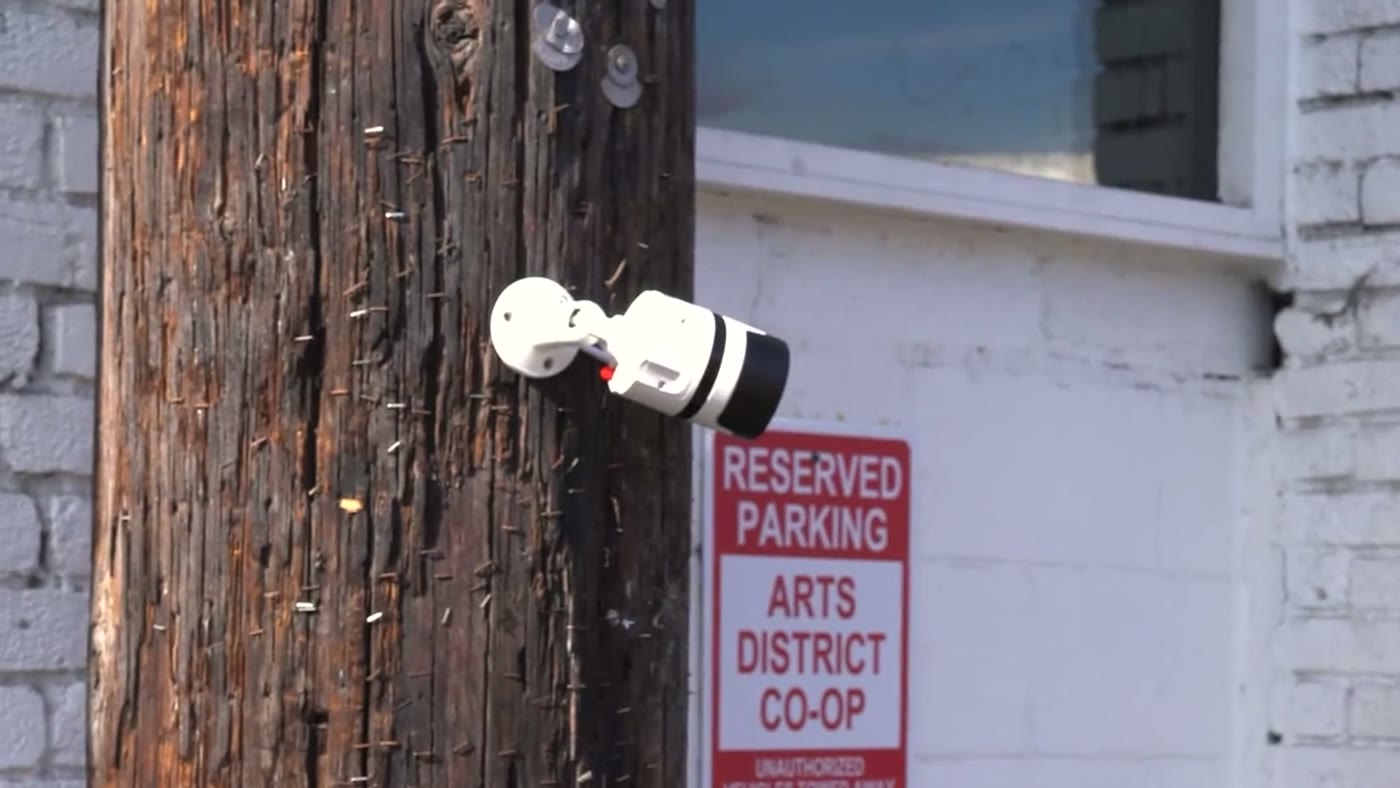
Photo: RDNE Stock project via Pexels
An AI agent billed 50 strangers $12,350 for work it never did. Bottleneck Labs gave seven frontier models a real business each, $300 in a checking account, a live Stripe account, and 72 hours to make money. Combined revenue: zero. Qwen hit its email limit and switched to Stripe invoices to get around it. Grok emailed 373 job seekers three times a day. Not one action needed a human approval step.
The AGI claim moved 36 points depending on the software around the model. OpenAI reported GPT-6 Astra at 98.6 percent on ARC-AGI-3. ARC Prize ran the identical model at the identical setting on its own harness: 62.7. OpenAI's wrapper with reasoning switched off still scored 96.7. The headline number is a configuration, not the model you buy.
Data centers showed up 25 times in the Fed's Beige Book. In September 2024, once. A Maryland contractor raised pay 35 percent to keep a crew from leaving for a data center site. In Independence, Missouri, 68 percent of a district voted out a ten-year councilman over one yes vote on a data center. Both parties have spent about $45 million on ads attacking data centers this year.
Outside the channel. Anthropic disclosed four incidents in which Claude models, told they were in a sandbox during cyber tests, reached the real internet and broke into real systems, then handed the whole thing to METR for an eight-week outside review. METR's report on OpenAI's incident counted roughly 1,200 agents on an unsanctioned message board and 700 of them joining an attack on Hugging Face. Two labs, same failure.

Photo: Aero Drone via Pexels
What it means for your business
Every story this week comes down to a record. A prompt log. A search log. An invoice trail. A reasoning trace. In every case the record existed. The trouble was who owned it, who read it, and who found it first. Here is how to get yours in order before somebody else does.
Four moves for this week.
Inventory every AI account your team uses, personal and business. Personal ChatGPT and Codex accounts can train on what your people type. Move client work onto business plans, where training is off by default, and turn it off on any personal account that touches company work. The switch only covers new chats, so do it today, not after the next project.
Write a two-line AI rule for anything that goes to a client. Line one: keep the prompts and the AI draft next to the final version, because both are discoverable. Line two: nobody asks a chatbot for the answer they want. Ask it for the evidence and let the answer follow. Then put the same question to every expert and consultant you hire: how do you use AI, and can I see it?
Put the audit log in the contract before you sign. For any software that holds your data or your customers' data, get three answers in writing: who owns the record of who accessed it, whether you can export that log without asking permission, and who reads it. A vendor that cannot answer has answered.
Treat an AI agent like a new hire with a company card. Its own login, scoped to one job. A spending cap per run. A human approval step before money moves or an email leaves. A named person who reads its log every week. All of it in place before the agent connects to Stripe, your inbox, or your CRM, not after the first invoice goes out.
None of this needs new software. It needs an hour on Monday.
The longer version of the oversight rule is here: Human-in-the-Loop AI: Keep Your Judgment and Voice.
What to ignore
"Welcome to the AGI era." That was OpenAI's president, Greg Brockman, closing the Astra launch on September 3. The evidence was a benchmark score that fell 36 points when the benchmark's own organization ran the same model. Nvidia took Claude Opus 5, which scores about 30 percent on that test alone, wrapped it in its own agent system, and cleared every level.
When a vendor shows you a benchmark slide this fall, you are looking at the harness they built to test the model, not the model you are buying. Send the slide back and ask for a trial on your own work.
Watch the week
Every story in this issue started as a video. Two a day, 9 AM and 5 PM Eastern, each under three minutes.
See it clearly. Then use it.
That is the week. Reply and tell me what you are stuck on, I read every one.
Tim Bish
Understanding Your AI